Teaching developers a new language
Created Flutter's first interactive coding tutorials by applying learning science research, repurposing survey software for rapid prototyping, and testing with 15 developers. Result: reduced bounce rates and published frameworks adopted by Google's developer relations team.
Problem
Flutter is Google's cross-platform UI framework. But it requires Dart, a programming language new to many developers.
Learning Dart was the #3 reason developers didn't adopt Flutter. Mature languages like JavaScript or C# had rich interactive resources; Dart only had static docs.
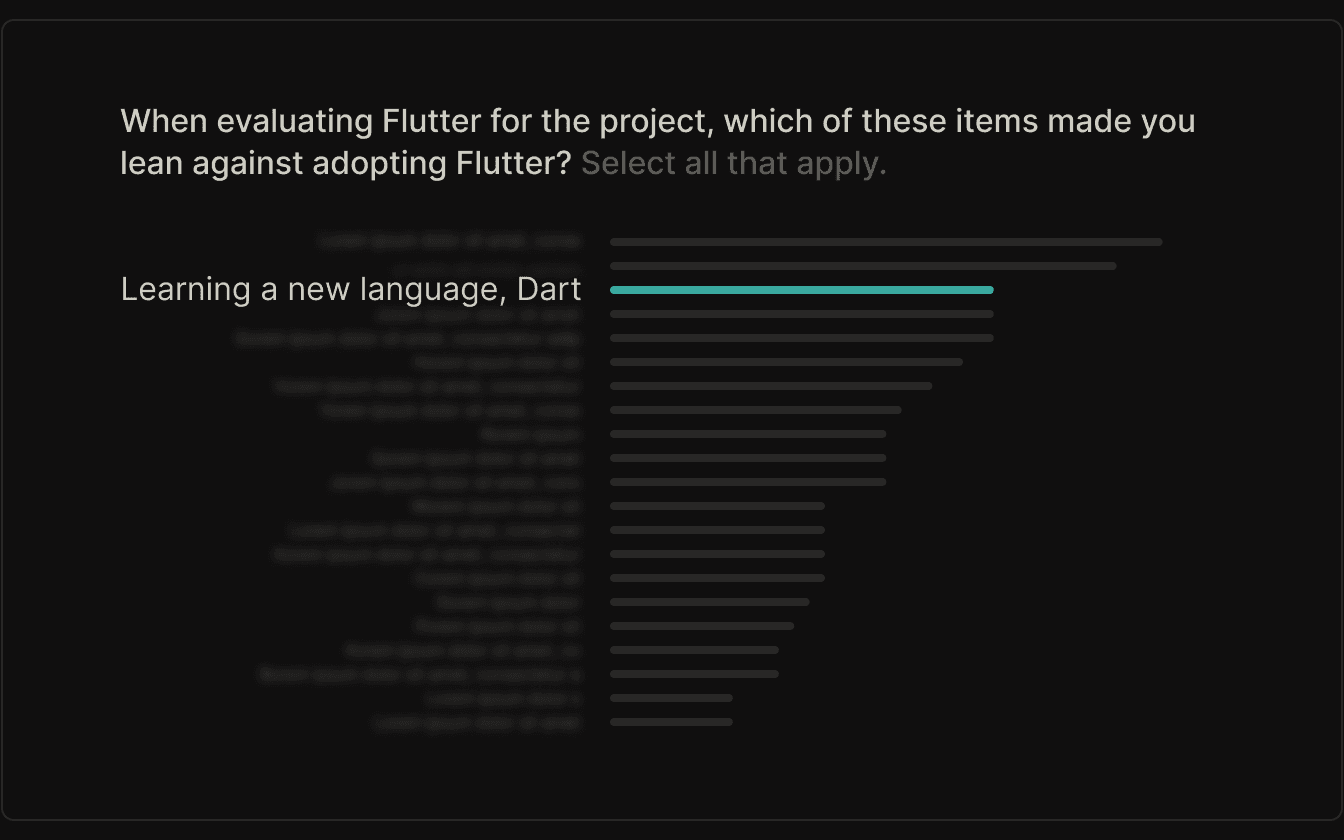
We needed to remove the barrier. Not just write more documentation, but design for how people actually learn.
My role: Learning science research → prototyping → user testing → post-launch measurement. Solo researcher working with PMs, engineers, and technical writers across three offices. 2-3 weeks per cycle, from research to launch.
Research
I reviewed learning science literature. I analyzed 18 coding tutorials—from Codecademy, Kubernetes to freeCodeCamp. Two common approaches:
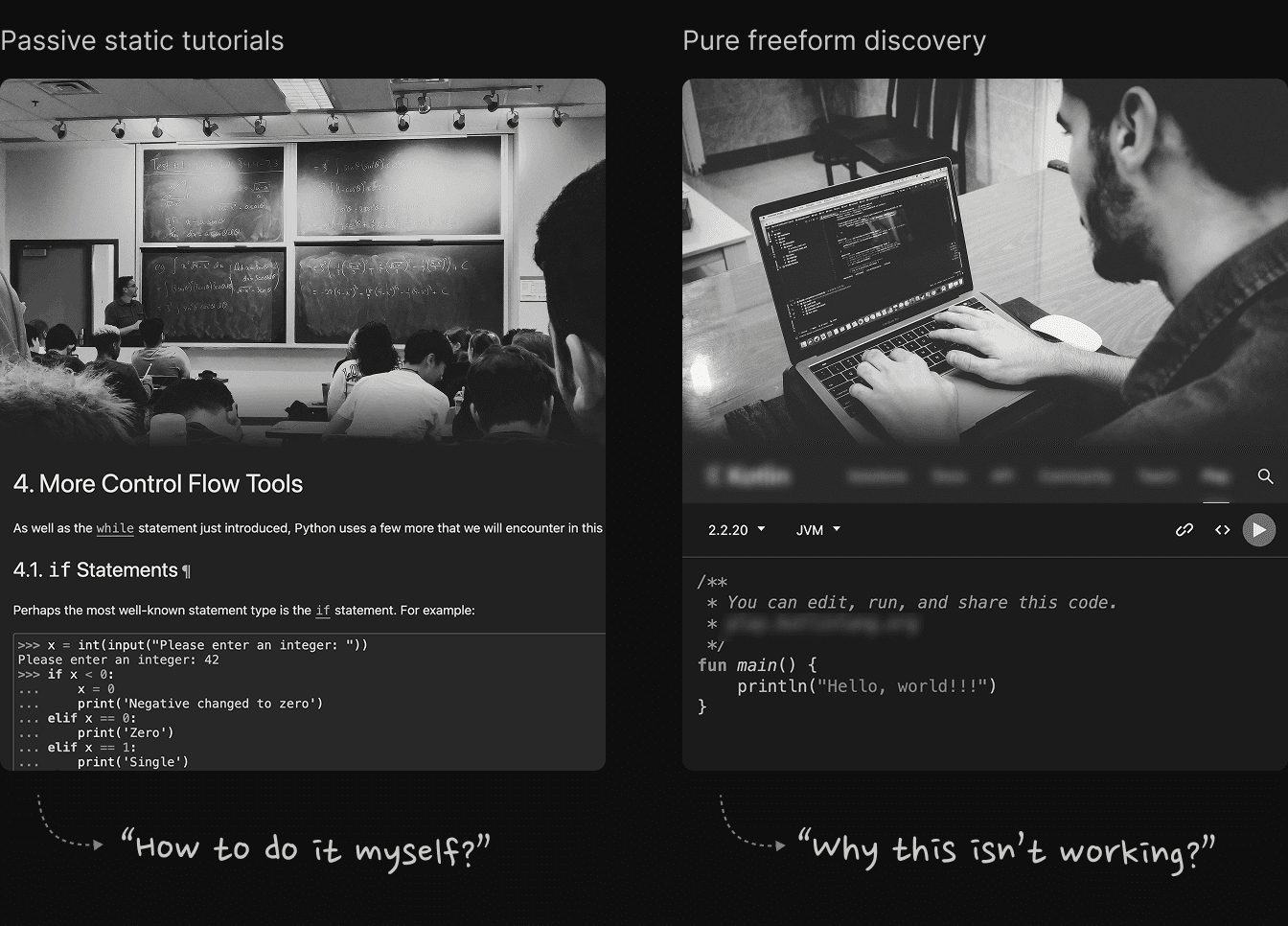
- Passive tutorials: Watch, read, memorize. You think you learned, but can't apply.
- Discovery learning: Blank canvas sounds empowering. Leads to frustration.
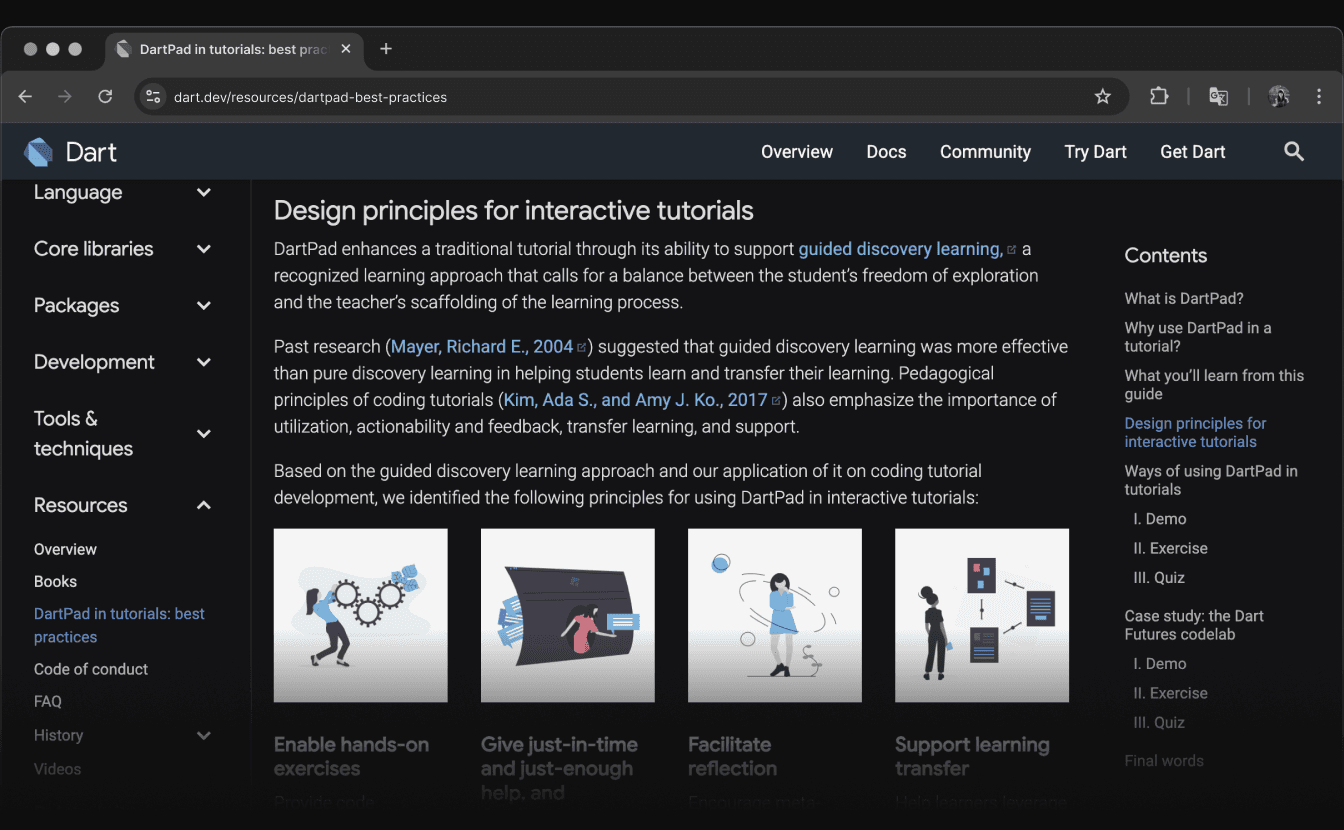
The middle ground is guided discovery learning. Give learners a clear problem, just enough structure, room to struggle productively.
I distilled this into three principles:
- Scaffold, don't overwhelm
- Facilitate reflection between steps
- Teach transfer, not memorization
Each principle required design decisions: When to show hints? How much help? When to pause versus let them continue?
Alignment: 3 hours instead of 5 days
PMs, engineers, and technical writers across three cities. Packed Google I/O schedules. Nobody knew where to start.
Engineers: What should we build first?
Writer: How do we create effective tutorials?
PMs: What works in competitor tutorials?
I compressed a 5-day Design Sprint into three 1-hour sessions over two weeks.
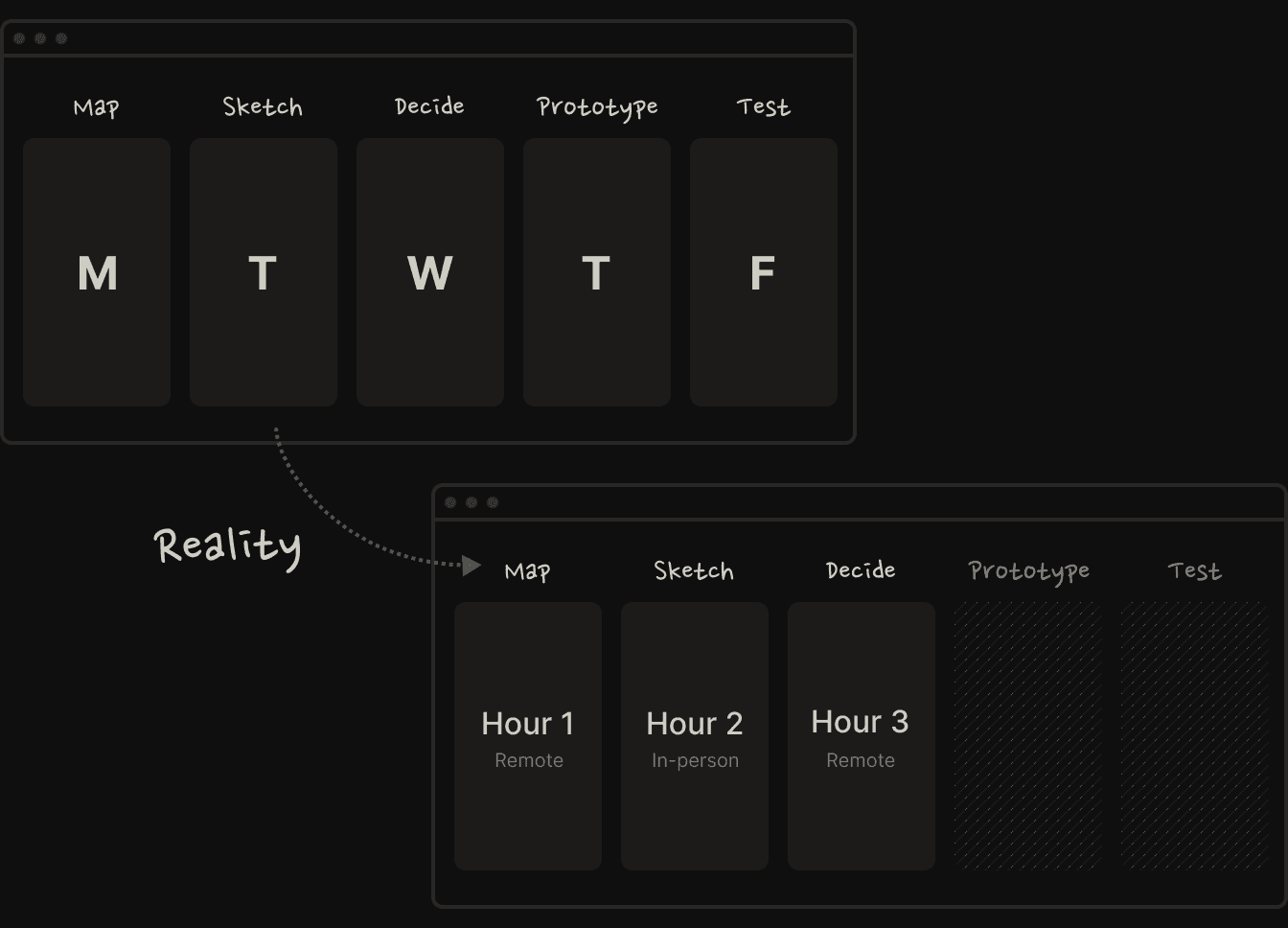
Output: Demo → exercise → quiz. Everyone knew what we were building and why.
Prototyping
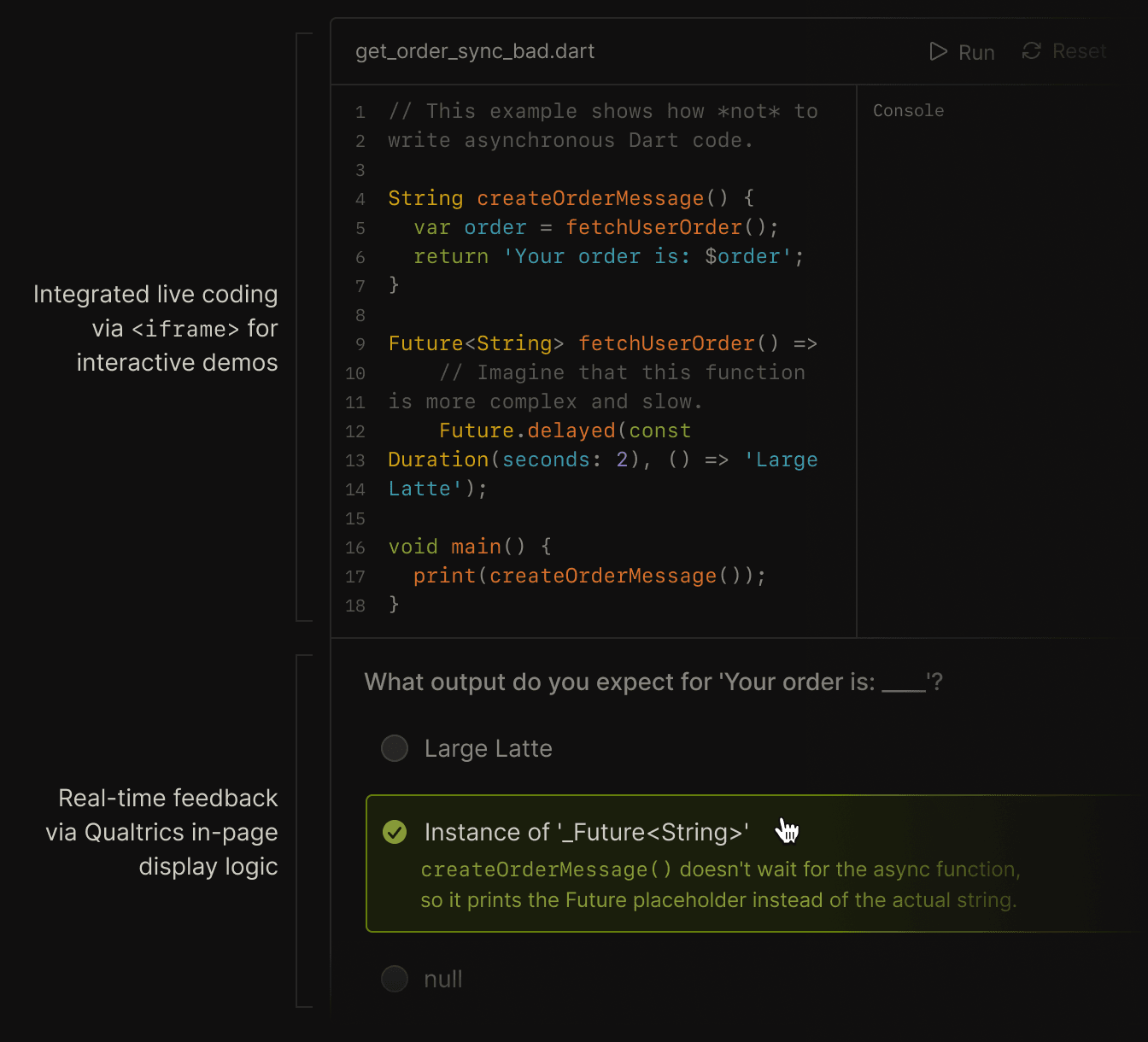
I needed to test the interaction components before the infrastructure was ready. I repurposed Qualtrics—a survey tool—into an interactive learning environment.
Multi-fidelity approach:
- High-fidelity: Embedded a working code editor so it felt real
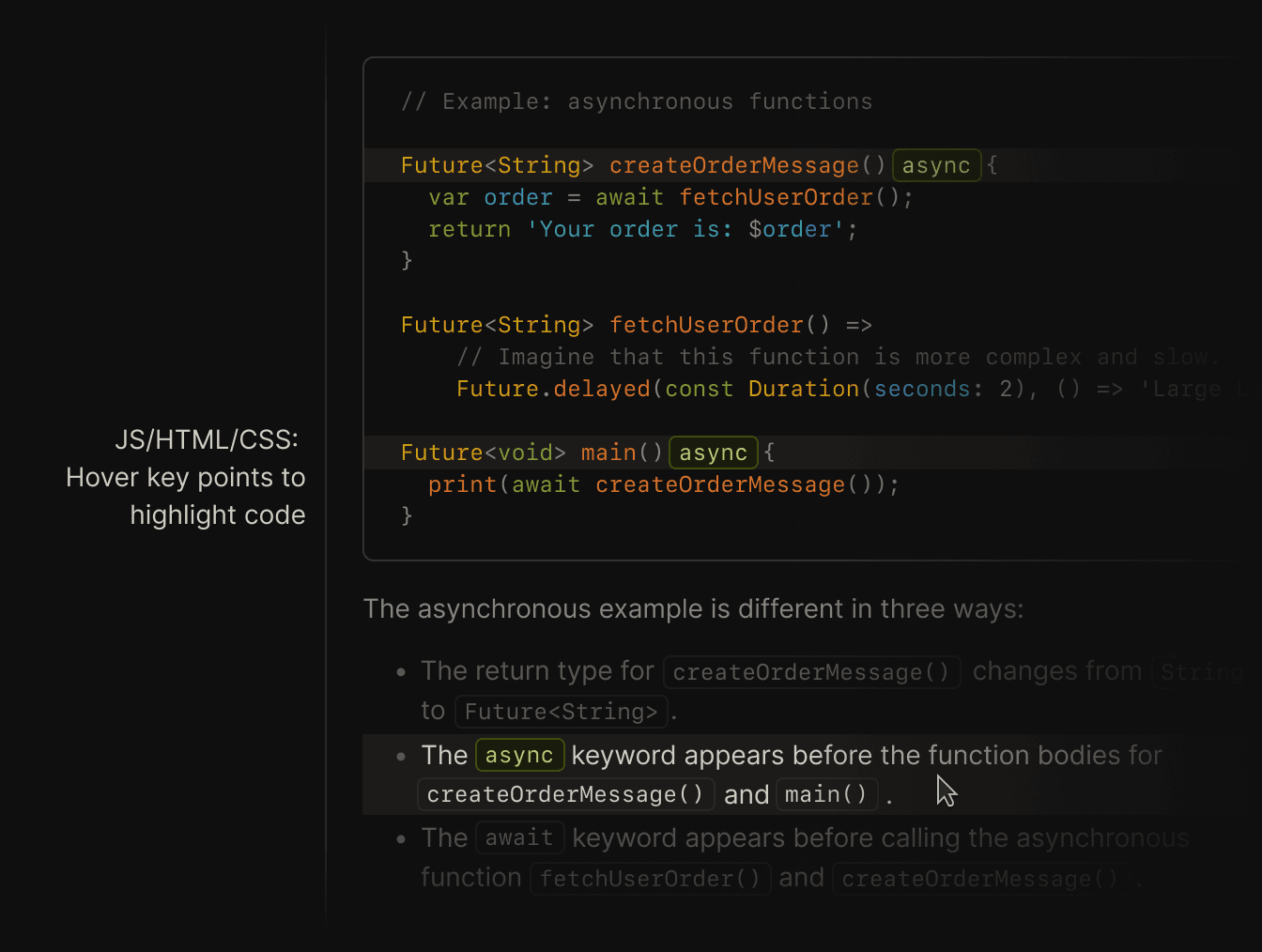
- Mid-fidelity: Built interactions with JavaScript, HTML, CSS
- Low-fidelity: Tested variations quickly with slides
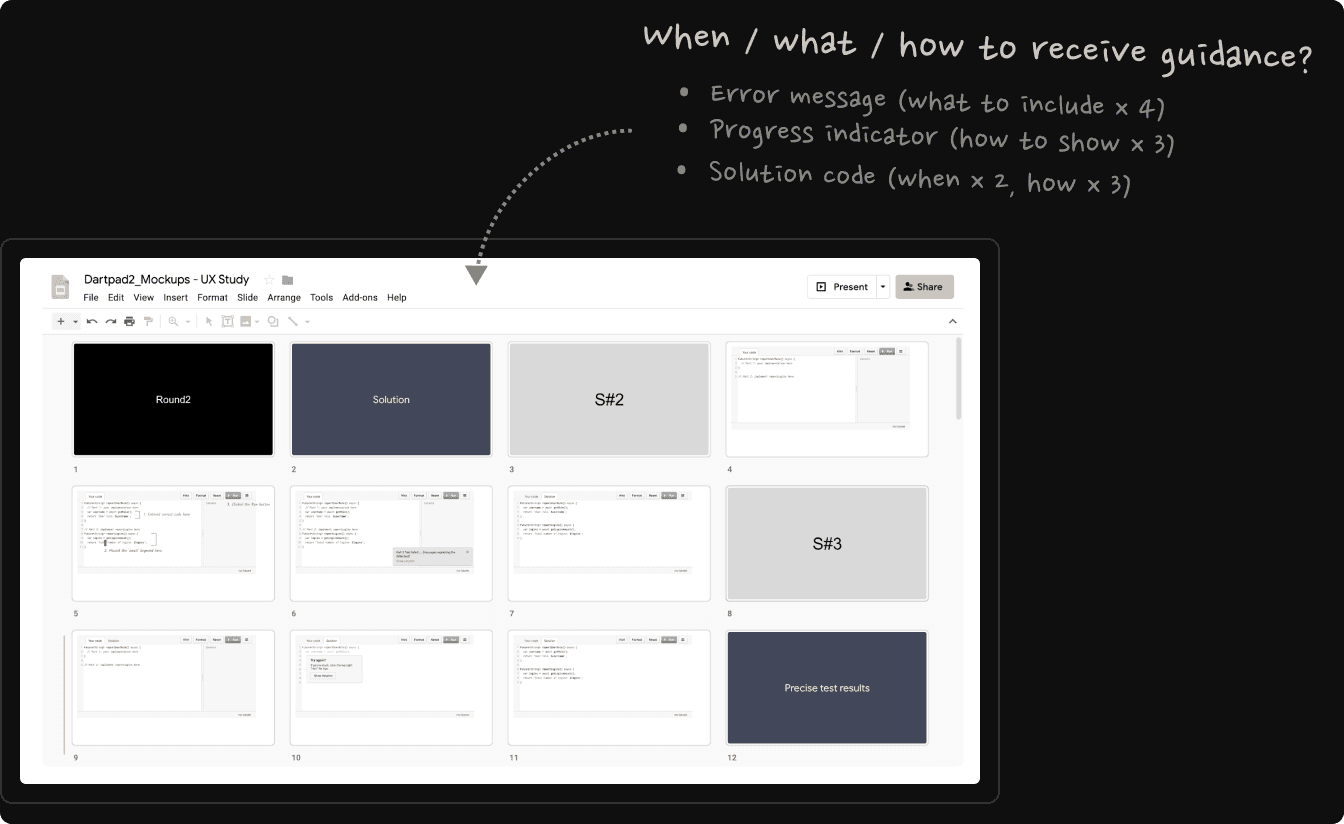
User testing: 15 developers, 2 rounds
I tested with Java developers learning Dart for the first time. Spent an hour with each. Measured completion rate, error types, usefulness, usability.
Recruiting challenge
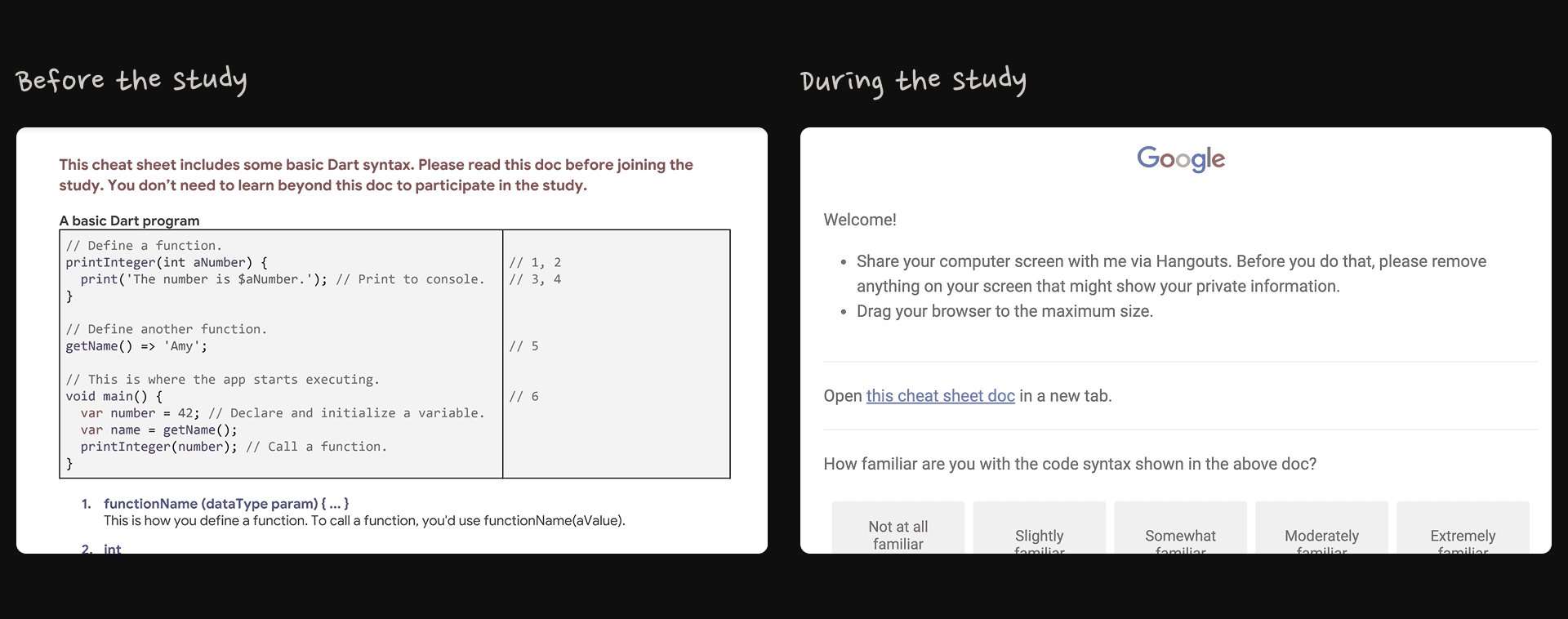
I needed Dart beginners with async experience in other languages—a rare profile. I recruited Java developers and gave them a Dart syntax cheat sheet.
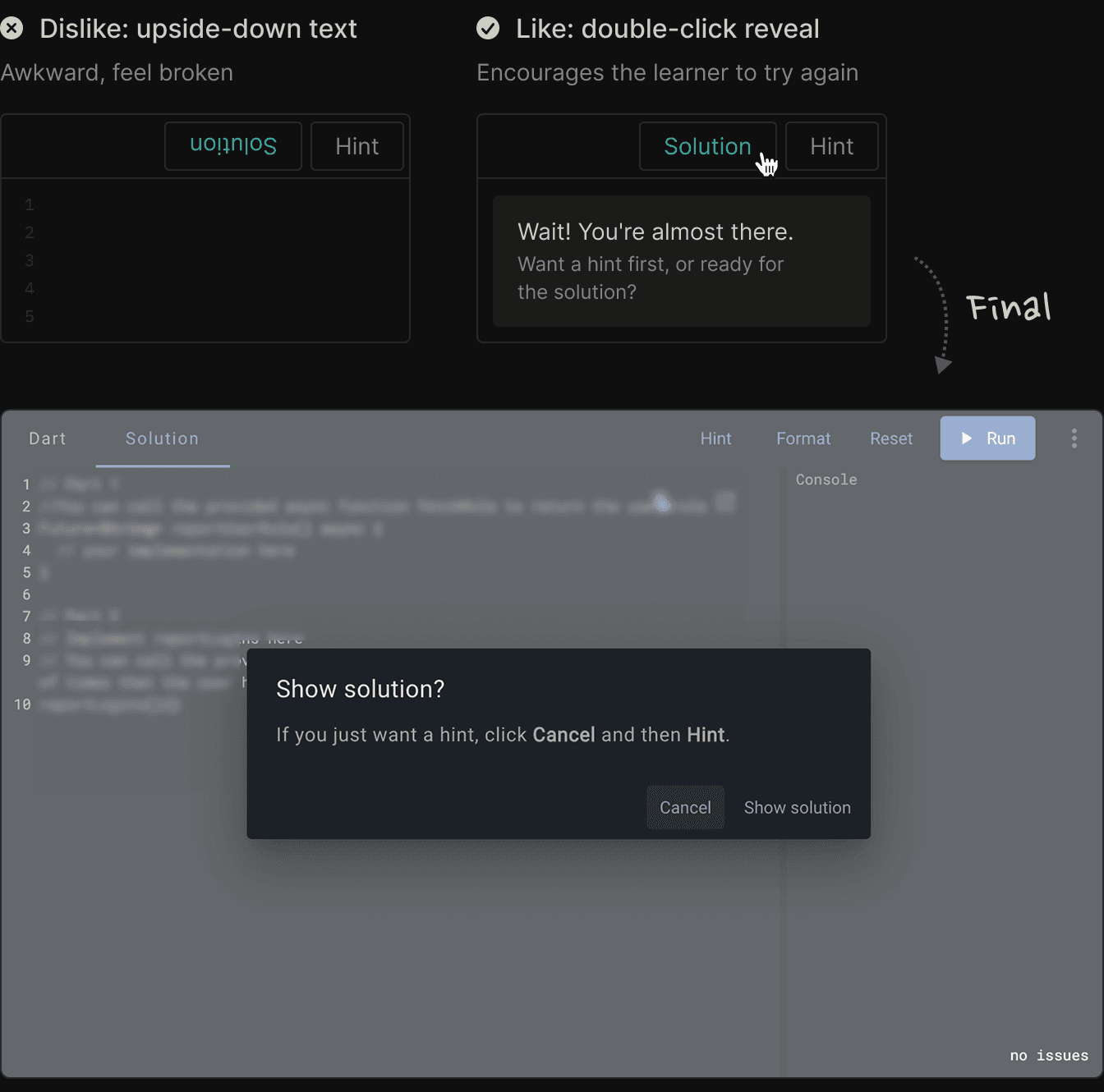
Key insight: Participants wanted the challenge of solving independently, yet hiding solutions hurt discoverability. Half wanted solutions even after passing—to check their approach.
Final design: solution button always visible, but two clicks to reveal. First click encourages using hints. Learners can override if needed.
Results
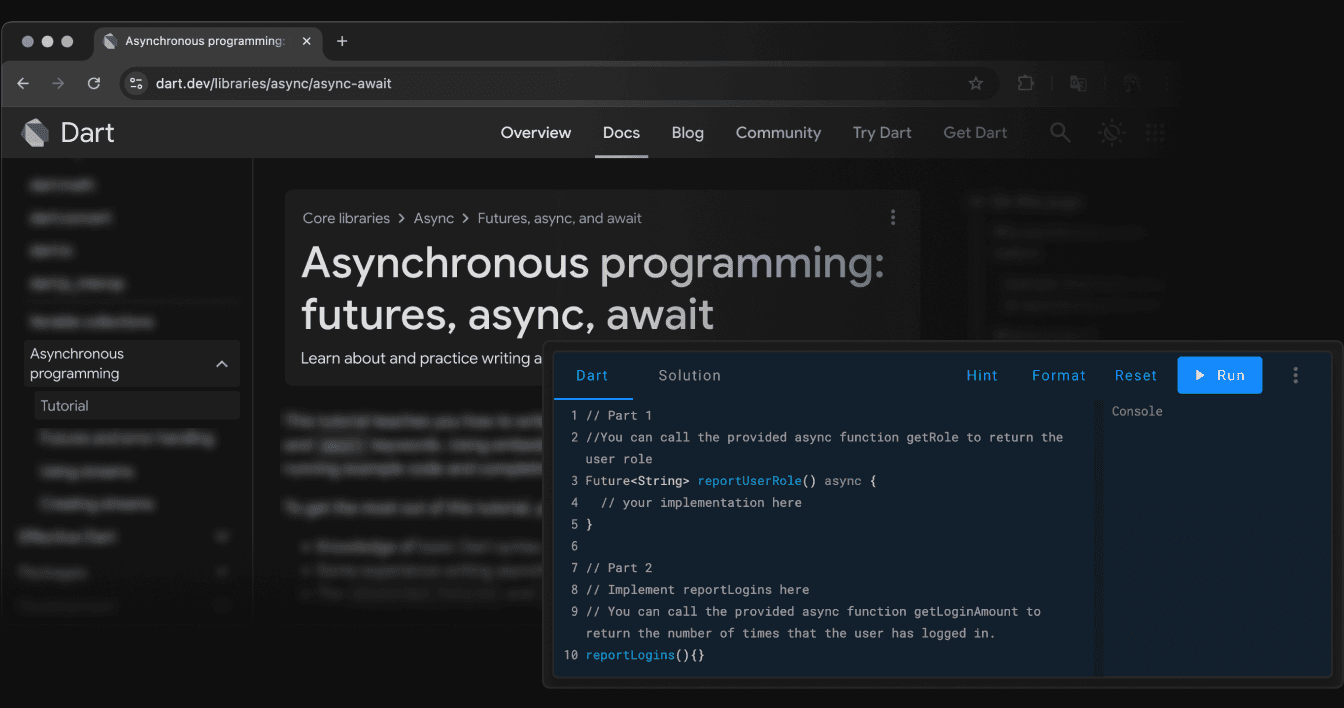
Shipped the tutorial with embedded survey (202 responses) to measure learning transfer and analytics to track completion patterns.
Impact
- Reduced bounce rate, improved learner confidence
- 45+ content changes from user testing
- Created Dart and Flutter's first interactive tutorials
- Published open-source framework guide—adopted by team and community
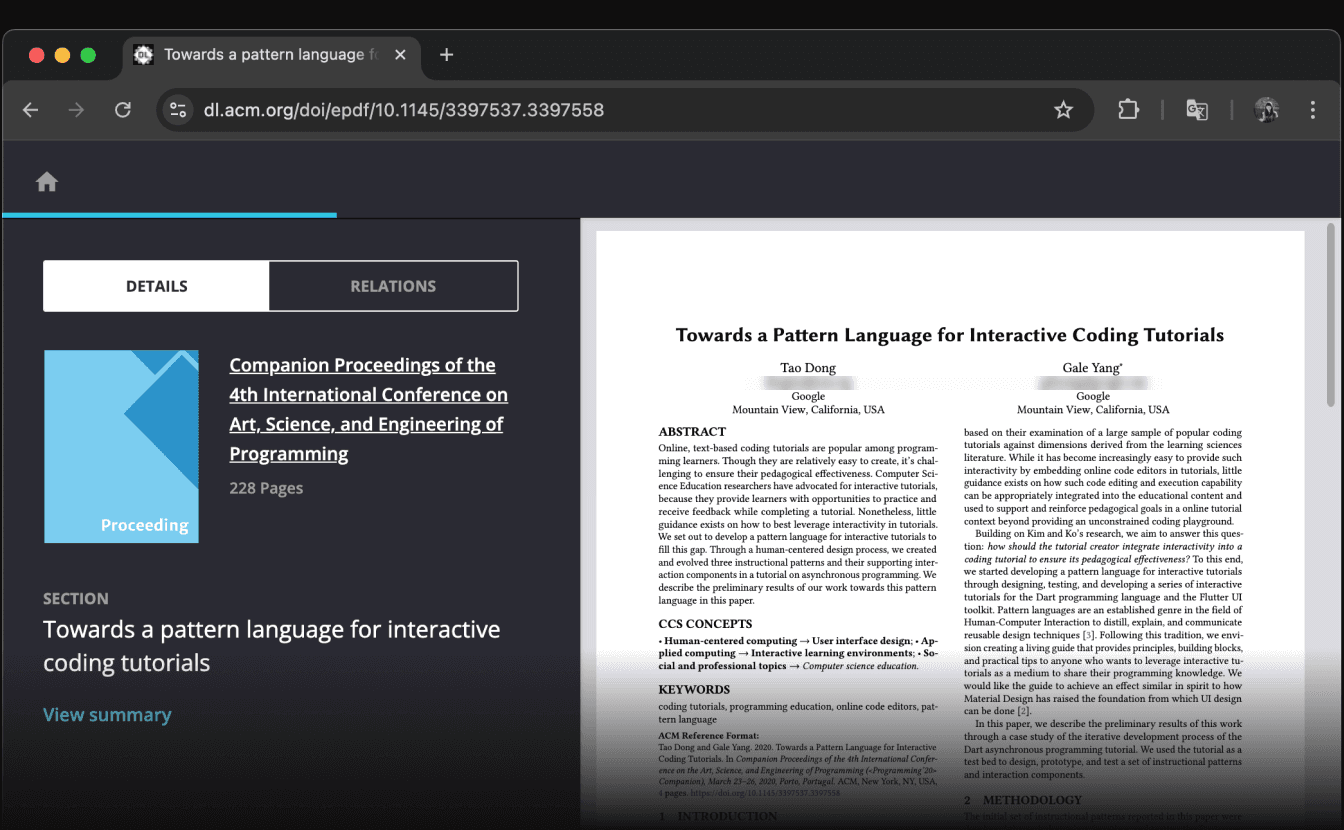
- Co-authored academic poster on tutorial design
- Featured in keynote release
- Cited in org all-hands (120+ people)
- Delivered 3 lightning talks
I've never worked with user research with this level of granularity.
— Product Manager, 10+ years at Apple, Amazon, Microsoft
Reflections
Repurposing Qualtrics wasn't elegant, but it worked. Sometimes the tools you have matter less than moving fast and learning.
The two-click solution: sometimes good UX means keeping the friction, just putting it in the right place.